













TL;DR. A WHS Officer’s day mixes physical site presence (walks, inspections, toolbox talks) with documentation (JSAs, SWMS, inductions, incident reports) and people work (contractor management, worker consultation, coaching). No two days are identical. Across construction, mining, manufacturing, and government, WHS Officers earn $75,000–$120,000 entry to experienced, with HSE Advisor and Manager roles climbing to $140,000–$220,000+. Cert IV WHS (BSB41419) is the qualification — motivated students finish online in as little as 3 months.
The short version: three buckets
Most WHS Officers split their day across three buckets:
- On the floor (30–50%) — site walks, observations, spot inspections, toolbox talks, inductions, contractor check-ins.
- At the desk (30–40%) — reviewing JSAs and SWMS, updating the risk register, writing incident reports, pulling data for safety committee, responding to regulator queries.
- With people (20–30%) — consultation with HSRs and workers, coaching supervisors on safety leadership, sitting in toolboxes, investigating incidents.
A day in the life — Construction Site Safety Officer
- 06:30 Pre-start with the builder and foreman; confirm today’s high-risk work and permits.
- 07:00 Lead the pre-start toolbox talk for ~40 trades; focus today on confined-space work and weather exposure.
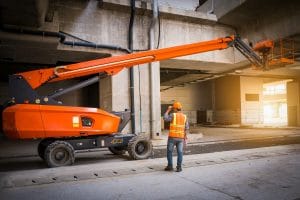
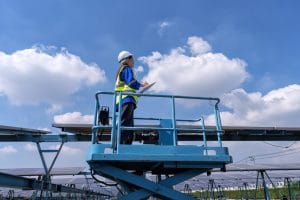
- 07:30–10:00 Site walk — check fall-arrest setups, scaffold tags, EWP logs, SWMS matching the actual work, and amenities.
- 10:00 Morning tea — consult with two HSRs about a near-miss from yesterday.
- 10:30–12:00 Desk time — finalise the ICAM investigation from last week’s LTI, update the risk register, approve three new SWMS from electrical subbies.
- 12:30–14:30 Induct two new labourers; second site walk to catch the afternoon work.
- 14:30–16:30 Builder’s weekly safety meeting; review KPIs, near-miss trends, upcoming high-risk work.
- 16:30 Close-out — site lock-up check, tomorrow’s plan emailed to the builder.
A day in the life — FIFO Mining Site Safety Officer
- 05:00 Pre-start in the crib room with the crew; confirm isolations and confined-space permits.
- 05:30 Toolbox talk with the dayshift operators and maintainers.
- 06:00–11:00 Pit or plant walk — operator observations, hot-work permit check-ins, contractor spot audits, isolation verification.
- 11:00 Crib — consult with HSRs and shift supervisors about fatigue trends.
- 11:30–14:30 Incident investigation desk time — progress the ICAM from a spill two days ago; prepare the notifiable incident report for RSHQ / DMIRS.
- 14:30–17:00 Afternoon walk — focus on mobile plant/pedestrian interactions and fatigue signs.
- 17:00 Close-out meeting with the Superintendent; brief nightshift safety officer; dinner in the mess.
A day in the life — Manufacturing HSE Advisor
- 06:00 Pre-start with the shift supervisor; review the 24-hour incident log.
- 06:30 Dayshift toolbox; brief the line on an updated SOP.
- 07:00–09:30 Plant walk — check guarding, LOTO, chemical storage, forklift-pedestrian segregation, racking.
- 09:30–12:00 Desk time — ISO 45001 internal audit prep, update SDS register, close out three CAPA actions.
- 12:30–14:00 Consultation meeting with HSRs; cover manual-handling risk on the new product line.
- 14:00–16:30 Contractor induction for the shutdown team arriving next week.
- 16:30 Dayshift close-out with the shift supervisor; handover note for nightshift HSE.
A day in the life — APS WHS Officer (Canberra)
- 08:30 Arrive; check the WHS inbox and risk register for new entries.
- 09:00–10:30 Workplace inspection of a fit-out area on Level 4; document findings.
- 10:30–12:00 Consultation meeting with HSRs on a psychosocial-hazard incident.
- 12:30–14:30 Report writing — monthly WHS dashboard for the SES Director.
- 14:30–16:00 WHS Committee — present metrics, capture actions.
- 16:00–17:00 Induct three new APS starters; schedule their ergonomic assessments.
The skills you actually need
- Walking the floor confidently. Comfortable on site, on the plant, or in the pit — able to have a safety conversation with a tradie, operator, or Director equally.
- Writing clearly. Incident reports, SWMS reviews, regulator correspondence, risk registers.
- Reading regulation. WHS Act, WHS Regulation, and relevant industry codes for your state.
- Investigating calmly. ICAM or 5-Why — separating root cause from individual blame.
- Building relationships. WHS Officers don’t have authority over line workers. Influence is everything.
Will AI replace the WHS Officer?
No. The physical presence, the site walks, the human consultation, and the named PCBU duty all require a qualified human. AI tools help with reporting, trend analysis, and document generation — they don’t replace the role. See: AI-proof careers in Australia.
Ready to start the career?
Cert IV WHS (BSB41419) — online, RTO 45189, finish in as little as 3 months.
Frequently asked questions
Is WHS mostly paperwork?
No. Most WHS Officers spend 30–50% of their day on the floor, in the pit, or in the plant. Desk work (JSAs, SWMS, incident reports) is real but doesn’t dominate the role.
Do WHS Officers work shift?
Some do — especially in mining, manufacturing, and 24/7 operations. Most daytime office and construction WHS roles are standard day-shift.
What’s a typical WHS Officer salary?
$75,000–$95,000 entry; $85,000–$120,000 with 1–3 years; HSE Advisor $120,000–$170,000; HSE Manager $170,000–$220,000+.
How quickly can I qualify?
Motivated students finish Cert IV WHS online in as little as 3 months.
Explore further
- Cert IV WHS — main course page
- How to Become a WHS Officer in Australia
- WHS Officer Salary Guide Australia 2026